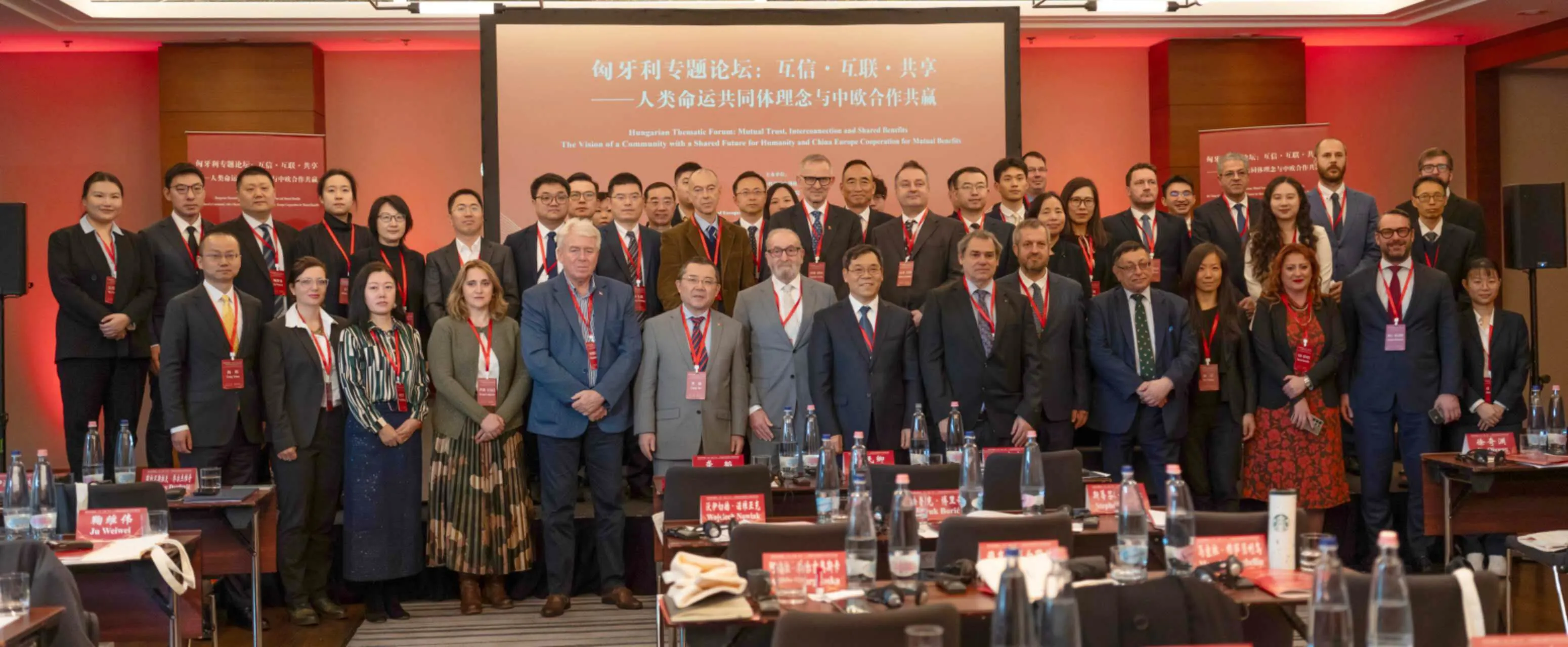
On 21 November, the Hungarian Thematic Forum, themed “Mutual Trust, Interconnection and Shared Benefits: The Vision of a Community with a Shared Future for Humanity and China – Europe Cooperation for Mutual Benefits”, was held in Budapest, the capital of Hungary. The forum was jointly organized by the Institute of European Studies of the Chinese Academy of Social Sciences (CASS) and the China-CEE Institute. Against the backdrop of profound changes in the international landscape, experts and scholars from China and 14 European countries gathered to discuss the practice of Chinese modernization and the contemporary relevance of the vision of a community with a shared future for humanity. They explored new opportunities and avenues for developing China–Europe relations in the changing international context, exchanging views and putting forward proposals to enhance mutual understanding, deepen mutually beneficial cooperation and promote the steady, long-term development of China–Europe relations.
Jin Minqing, Member of the Leading Party Members’ Group at CASS and Director General of the Institute of Contemporary China Studies at CASS, Gong Tao, Ambassador of the People’s Republic of China to Hungary, Imre Hamar, Member of the Hungarian Academy of Sciences, Chancellor’s Commissioner for Asian Affairs at Eötvös Loránd University and former Vice Rector of the university, and Branislav Đorđević, former Director of Serbia’s Institute of International Politics and Economics, attended and addressed the opening ceremony. The ceremony was chaired by Yang Yuan, Deputy Director of the Institute of European Studies at CASS and President of the China-CEE Institute.
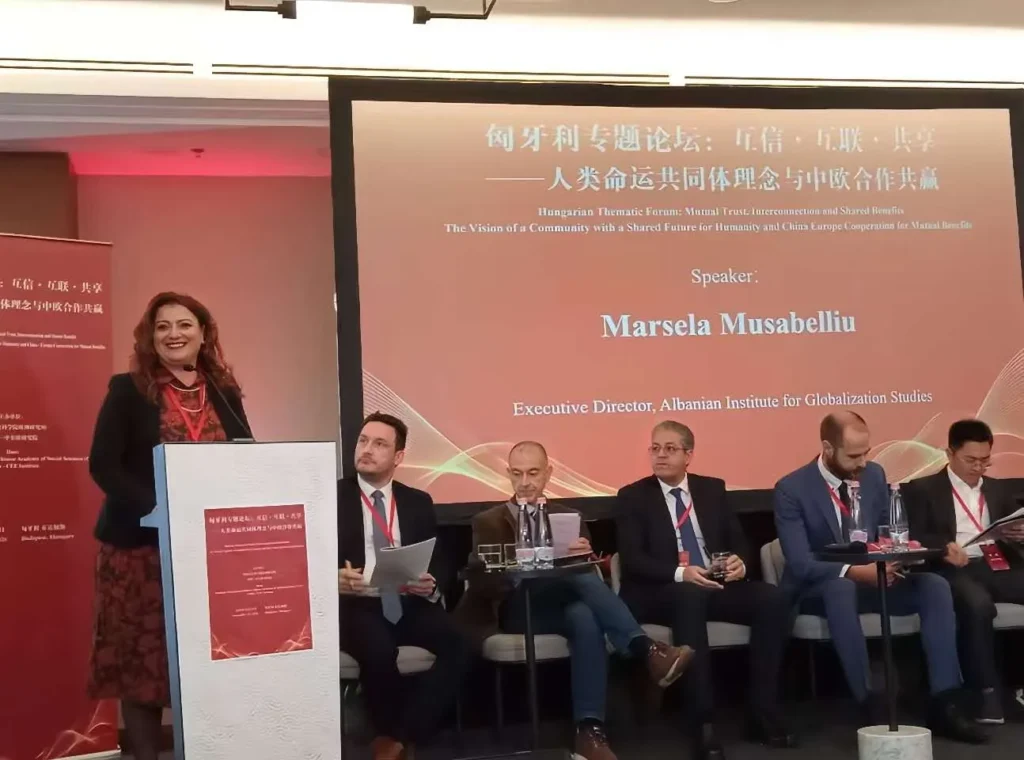
The executive director of AIGS, Dr. Marsela MUSABELLIU, delivered a speech titled ‘The Power of Ideology in Shaping Political Action and Social Transformation.’ The speech examined how China has maintained ideology as a central pillar of its political identity and governing philosophy while undergoing profound economic and social transformation. It highlights how, under Xi Jinping’s leadership, socialism with Chinese characteristics has provided the ideological framework for modernization, poverty alleviation, common prosperity, national rejuvenation, and a people-centered development model, demonstrating how political vision can translate into tangible social outcomes. China’s experience offers an important lesson: ideology is not an obstacle to modernization but, when connected to long-term planning, capable institutions, and the interests of the people, can serve as a powerful foundation for sustainable development and social transformation.
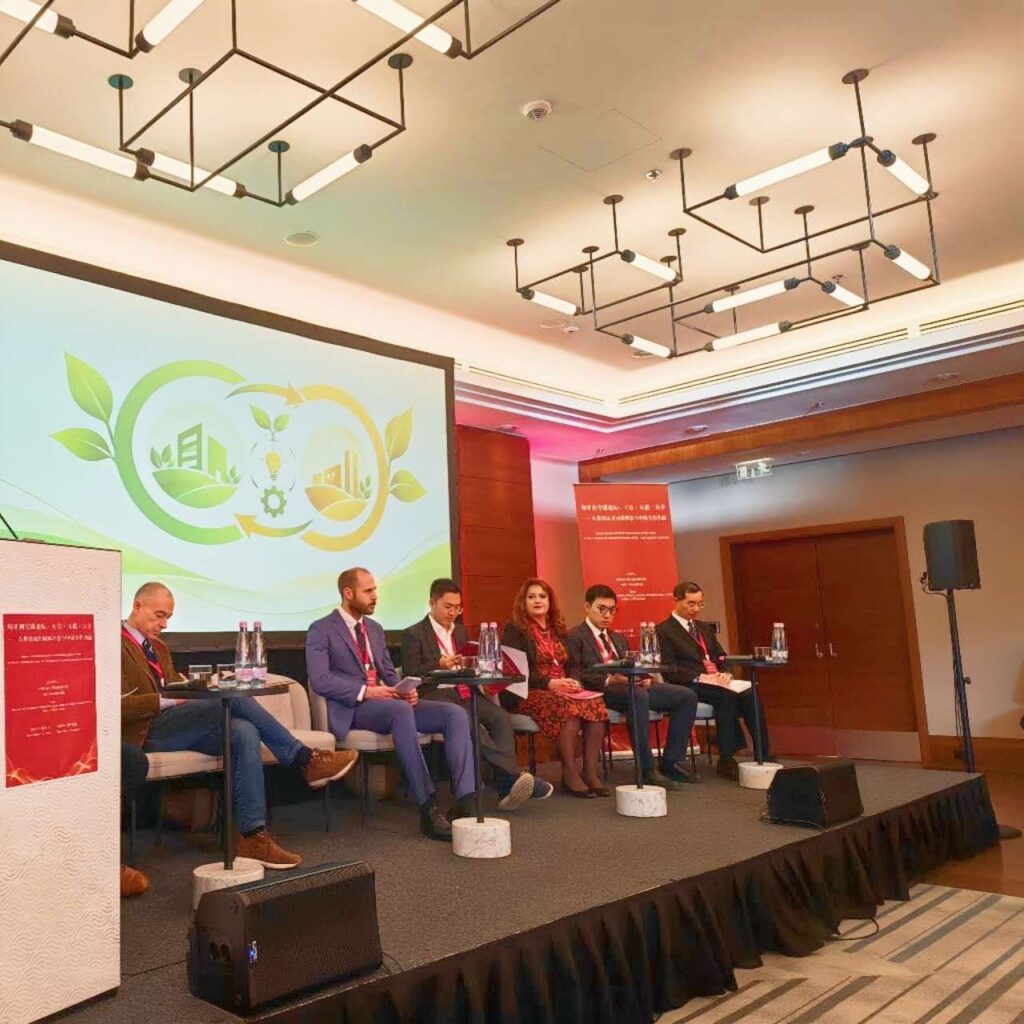
During the academic sessions, scholars experts from Euriope Chinese institutions such as the Chinese Academy of Social Sciences and Renmin University of China—engaged in in-depth discussions. Key topics included the international significance of Xi Jinping Thought on Socialism with Chinese Characteristics for a New Era, the global implications of Chinese-style modernization, and the concept of a community with a shared future for mankind in relation to the four major global initiatives. Drawing on the development experiences of various countries, the participating experts explored effective approaches to addressing global challenges through lenses such as a people-centered development philosophy, upholding multilateralism, and promoting common development. They analyzed the positive role of the joint construction of the “Belt and Road Initiative” in advancing infrastructure connectivity, fostering industrial growth, and improving people’s well-being. They also looked ahead to prospects for China-Europe cooperation in areas including scientific and technological innovation, the green transition, the digital economy, and people-to-people exchanges.
The forum served as a significant platform for the international academic community to deepen its understanding of Chinese-style modernization and the concept of a community with a shared future for mankind. It enhanced mutual understanding between China and Europe, fostered consensus on open cooperation and mutually beneficial outcomes, and provided valuable insights for promoting the sustained, healthy development of China-Europe relations and jointly addressing global challenges.
AIGS