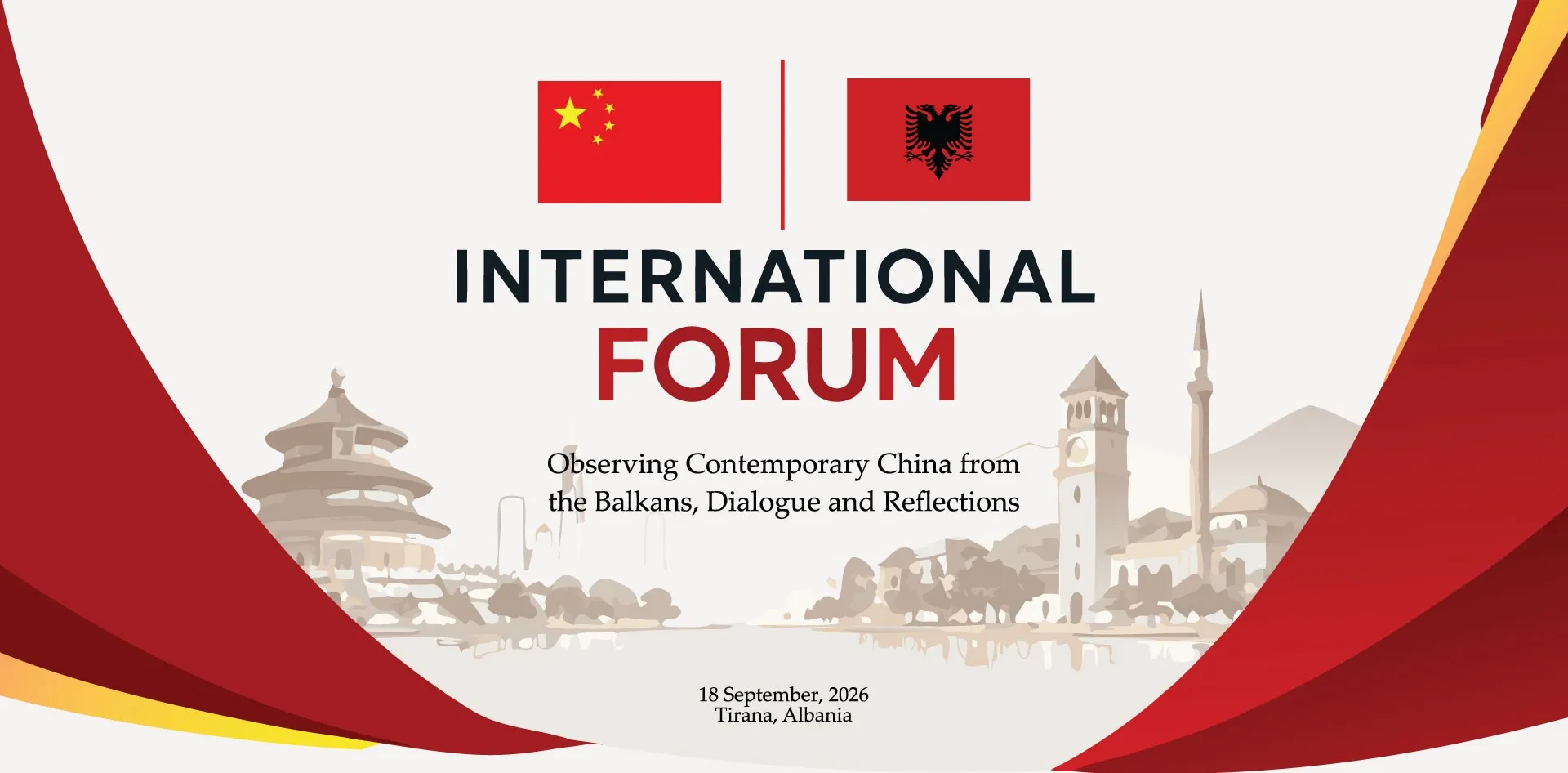
On September 18th, 2026, the Albanian Institute for Globalization Studies and the Embassy of the People’s Republic of China in Albania hosted the international forum Observing Contemporary China from the Balkans, Dialogue and Reflections.
The event brought together academics, researchers, analysts, and institutional representatives from Albania, China, North Macedonia, and Italy. Argumentum.al served as the official media partner.
The forum examined contemporary China through historical, geopolitical, academic, technological, and economic perspectives. The discussions reflected the complexity of China’s global position and the importance of examining bilateral relations through multiple perspectives.
Presentations addressed recent and past developments, city diplomacy, media cooperation, digital sovereignty, and the strategic choices facing smaller countries in an evolving international system.
H.E. Pang Chunxue, Ambassador Extraordinary and Plenipotentiary of the People’s Republic of China to the Republic of Albania delivers the keynote speech
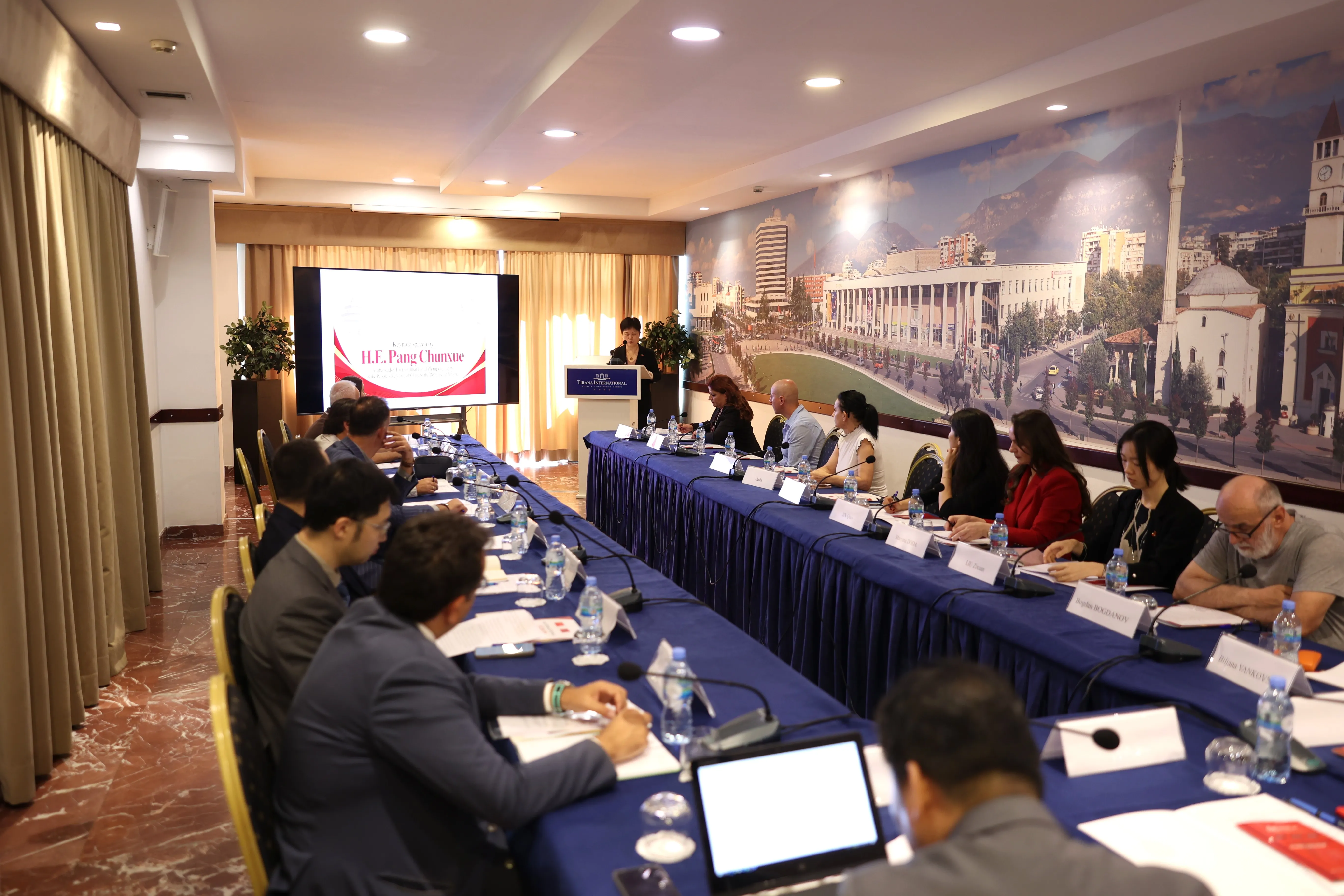
In her keynote address, H.E. Pang Chunxue, Ambassador Extraordinary and Plenipotentiary of the People’s Republic of China to the Republic of Albania, welcomed the forum’s focus on observing contemporary China from the Balkans. She highlighted two central questions concerning how China viewed the world and how the world viewed contemporary China.
Referring to developments in international affairs, Ambassador Pang explained that global transformations had accelerated and that the collective rise of the Global South had become an important factor in the process of global multipolarization. She described the international environment as unstable and marked by considerable changes and risks.
She presented China’s four global initiatives: the Global Development Initiative, the Global Security Initiative, the Global Civilization Initiative, and the Global Governance Initiative. According to her presentation, these initiatives addressed major challenges related to development, security, intercivilizational relations, and international governance.
The Global Development Initiative had sought to place development higher on the international agenda and promote stronger, greener, and more sustainable growth. The Global Security Initiative had emphasized common, comprehensive, cooperative, and sustainable security, while supporting peaceful approaches to international disputes.
Ambassador Pang also discussed the Global Civilization Initiative, which promoted equality, mutual learning, dialogue, and inclusiveness among civilizations. The Global Governance Initiative had focused on sovereign equality, international law, multilateralism, and action-oriented cooperation.
In her remarks, she invited researchers and experts to share perspectives on China, Albania–China relations, and China’s cooperation with Balkan countries. She emphasized the value of ideas and practical suggestions for further developing regional partnerships.
Prof. Dr. Kong Fanjun: Diverse Perspectives on Contemporary China in the Balkans
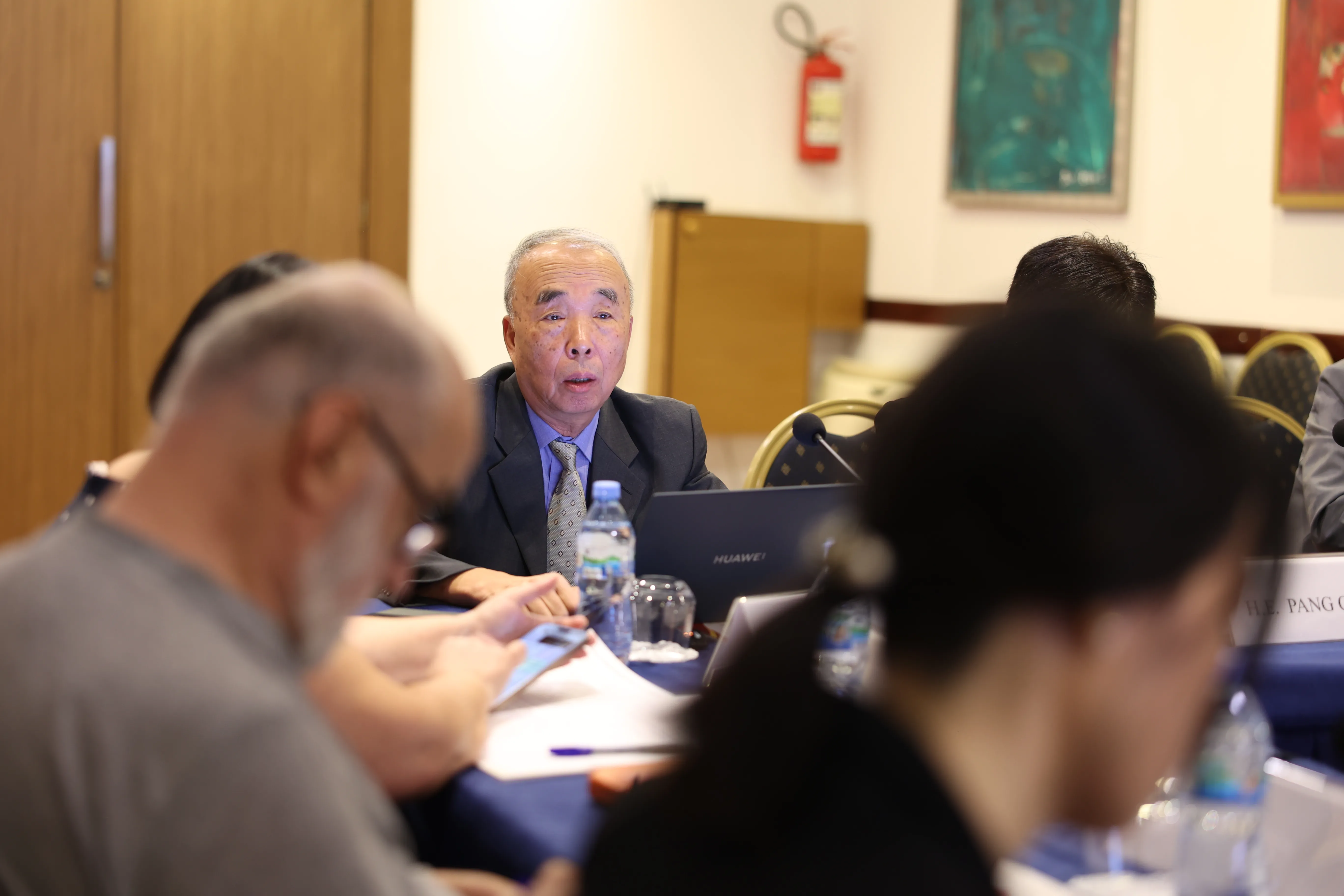
Prof. Dr. Kong Fanjun, Professor of International Relations at the School of International Studies at Peking University, examined the diversity of attitudes and perceptions toward China in the Balkan countries. Drawing on his experiences from numerous visits to the region, he described a broad range of academic, social, and political perspectives.
His presentation emphasized that perceptions of China in the Balkans did not always reflect the full complexity of Chinese society, development, and international engagement. He used a traditional Chinese metaphor concerning a leaf obstructing the view of Mount Tai to illustrate how a limited perspective could prevent observers from recognizing a broader reality.
Prof. Kong explained that knowledge of China could become selective and, in certain circumstances, instrumental, particularly in the interpretation of bilateral relations and cooperation. He nevertheless stressed that China represented a multidimensional phenomenon whose analysis could not be reduced to a single political, economic, or cultural dimension.
His contribution encouraged participants to consider the relationship between the perspectives through which China was observed and the broader reality being examined. He highlighted the importance of moving beyond simplified interpretations and recognizing the variety of experiences and analytical approaches present in the Balkans.
The presentation contributed to the forum’s broader objective of encouraging dialogue and reflection on how knowledge about China had been developed, interpreted, and communicated in the region.
Prof. Dr. Liang Zhanjun: Albania–China Relations in Historical Perspective
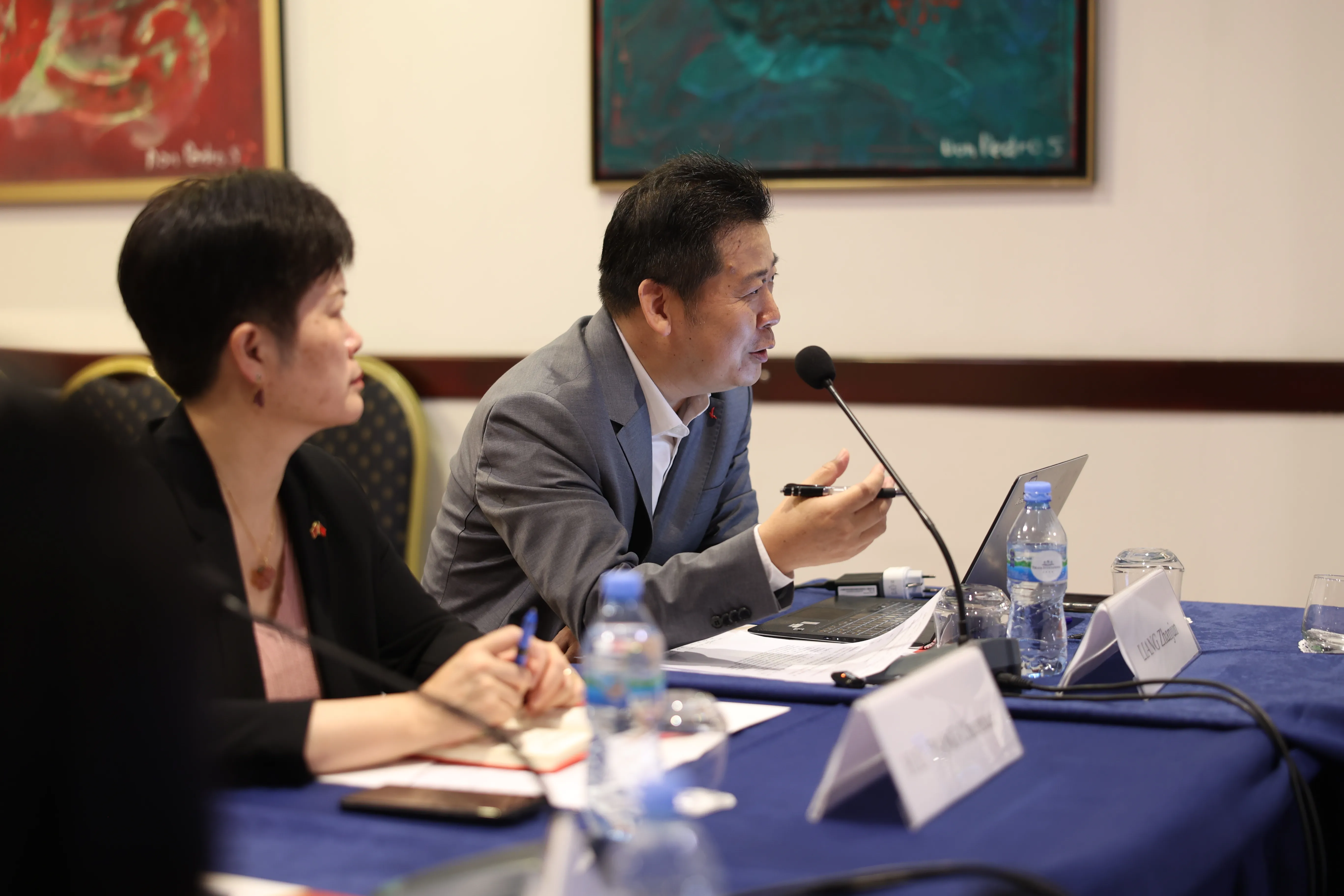
Prof. Dr. Liang Zhanjun, Professor of History and Director of the Center for Global and Regional Studies at Capital Normal University, presented a historical overview of Albania–China relations. He divided the development of bilateral ties into several major periods, emphasizing the changing political and international contexts that had influenced the relationship.
The first period, beginning in 1949, involved the establishment and consolidation of diplomatic relations and the development of early institutional connections. The period from 1955 to 1968 witnessed an intensification of political, economic, and ideological cooperation within the framework of the Cold War and socialist relations.
Prof. Liang also examined the subsequent deterioration of bilateral ties during the period from 1978 to 1990. Changes in the foreign policy orientations of both countries contributed to a gradual distancing and a significant reduction in the level of cooperation.
Following the transformations of the 1990s, renewed interest emerged in restoring and developing relations between Albania and China. He described the contemporary relationship as delicate and complex, placing it within the context of wider geopolitical developments and Albania’s changing foreign policy orientation.
The presentation also addressed public statements concerning Chinese investment in Albania, which he considered indicative of the changing nature of bilateral relations. His historical analysis demonstrated how diplomatic ties had evolved in response to ideological, political, and international changes.
The contribution underlined the importance of historical knowledge in understanding the present and future possibilities of Albania–China cooperation.
Prof. Dr. Biljana Vankovska: Academic Cooperation and Mutual Understanding
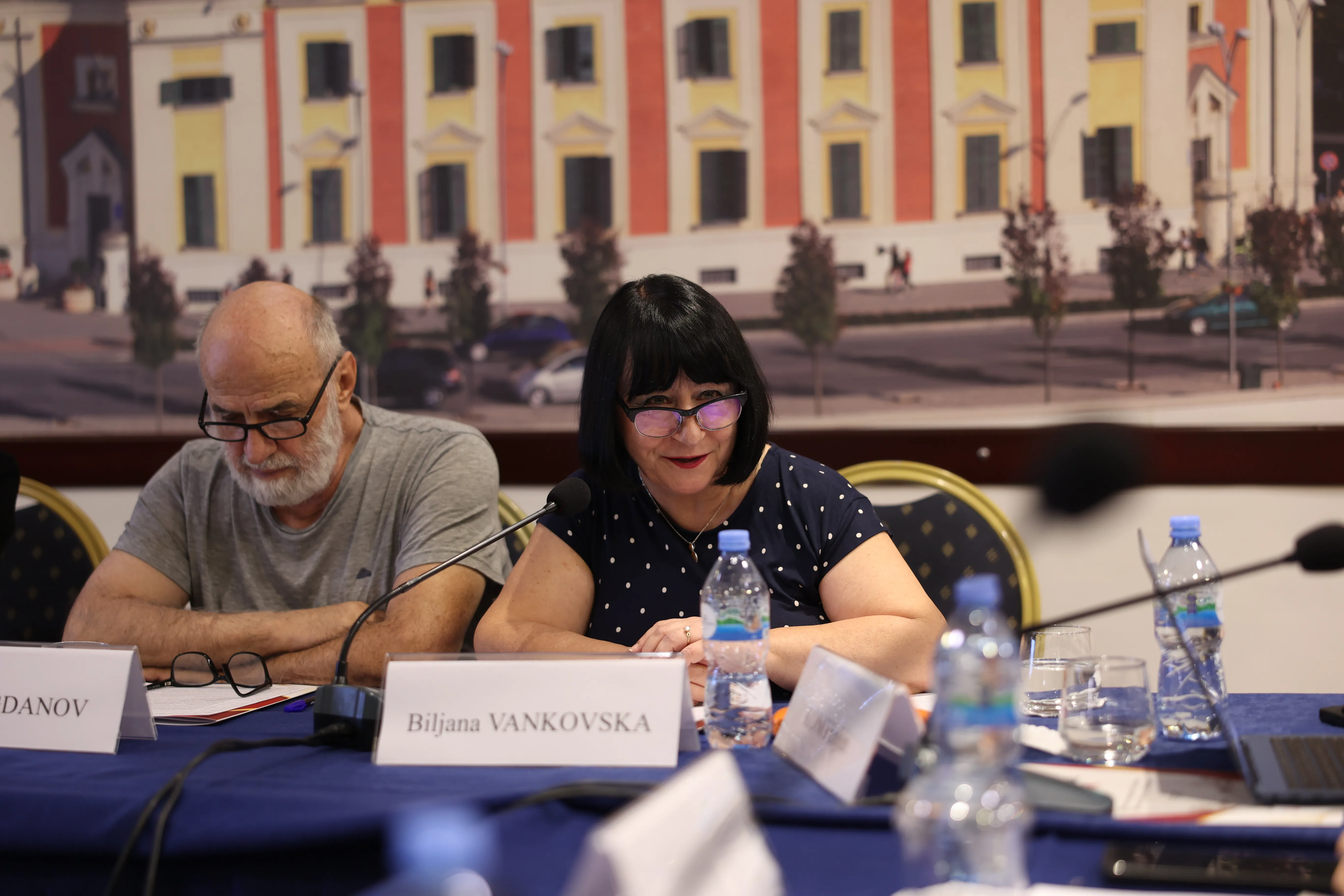
Prof. Dr. Biljana Vankovska, President of Synergia Orbi: Center for Global Analysis and Professor at Ss. Cyril and Methodius University in Skopje, focused on the role of academic cooperation in developing mutual understanding between China and the Balkans.
Her presentation examined how universities and researchers had contributed to the production of knowledge about one another. She explained that academic cooperation had involved more than the exchange of information and expertise, as it had also influenced the ways in which societies understood and represented the other.
Prof. Vankovska noted that Chinese and Balkan scholars had approached one another through different academic traditions, historical experiences, and analytical frameworks. She therefore raised questions about how China had been studied in the Balkans and how the Balkans had been examined in China.
Her contribution addressed the sources, narratives, and assumptions that had shaped academic research. She emphasized the importance of intellectual reciprocity, describing it as a movement away from one-directional knowledge transfer toward a dialogue in which both sides examined their own assumptions.
She also highlighted the role of young researchers and students in shaping future perceptions of China–Balkans relations. Academic exchange, in her view, had provided opportunities to challenge established interpretations and encourage a more balanced process of mutual learning.
The presentation reinforced the importance of universities as spaces for dialogue, critical inquiry, and long-term cooperation between societies.
Dr. Gianpaolo Camaggio: Forty Years of Friendship between Guangzhou and Bari
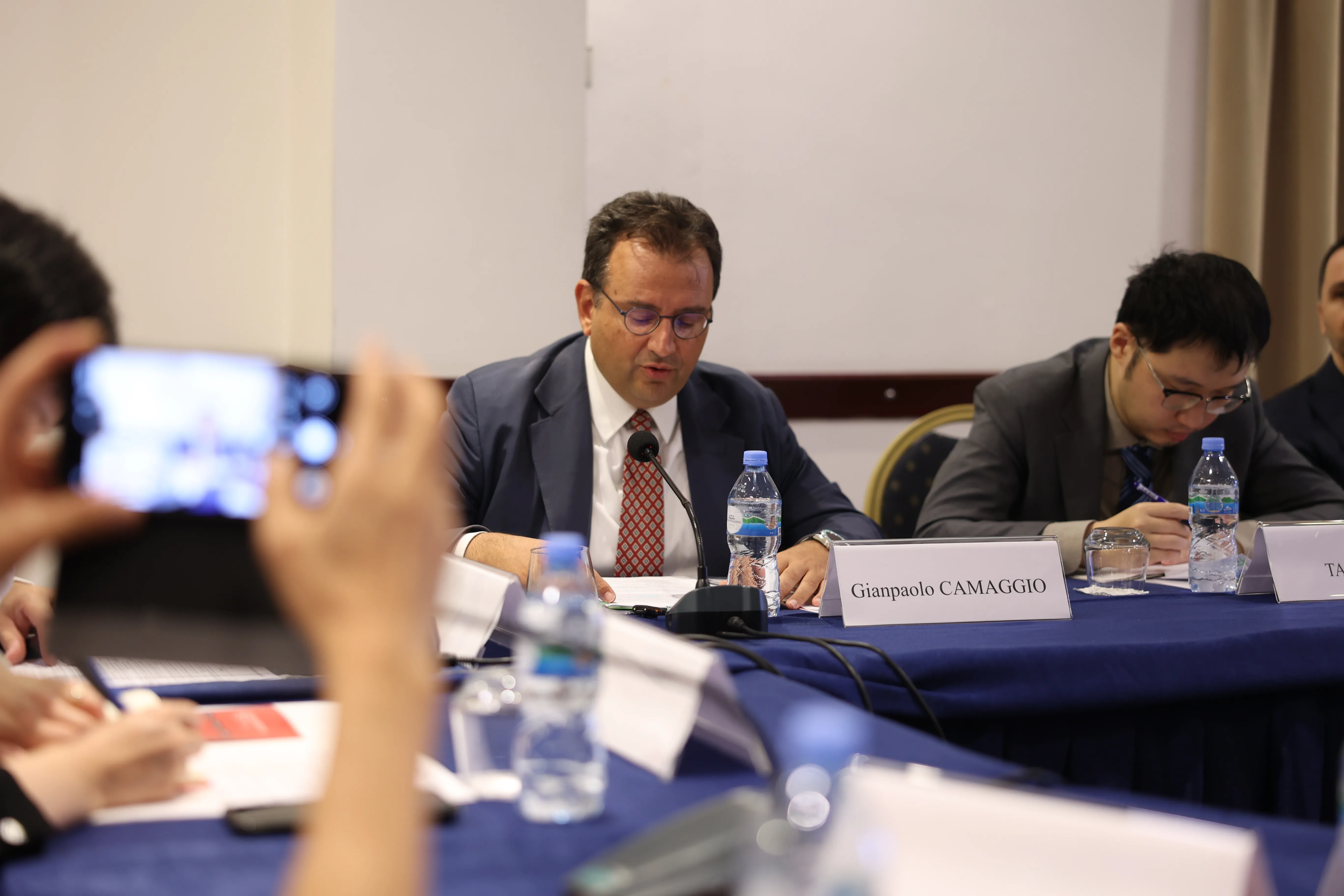
Dr. Gianpaolo Camaggio, Scientific Director of the Master’s program in International Business with China at LUM Giuseppe Degennaro University in Bari and Founder and Managing Director of Sinoglobal Investments Advisory, presented an analysis of the relationship between Guangzhou and Bari.
His contribution examined four decades of friendship between the two cities and explored the potential of city diplomacy as a means of strengthening international cooperation. He explained that Guangzhou and Bari shared several characteristics, including their positions as port cities, commercial centers, and gateways to their respective countries.
According to his presentation, the relationship had remained largely focused on reciprocal visits for approximately three decades and had produced limited concrete outcomes. A change occurred when the Municipality of Bari adopted a more professional and sustained approach to the partnership, involving specialists in China and professionals with knowledge of the Chinese cultural context.
Cooperation subsequently expanded into universities, art academies, conservatories, theatres, and media institutions. This development gradually shifted the relationship from institutional connections toward broader people-to-people engagement.
Dr. Camaggio presented city diplomacy as a mechanism for reducing prejudice and mistrust by creating opportunities for direct contact. He emphasized the importance of specialized professionals with knowledge of international relations and the Chinese context.
His presentation demonstrated how municipal partnerships could support cultural, academic, and economic exchanges, while generating practical benefits for local communities. The experience of Guangzhou and Bari illustrated the value of sustained institutional commitment and professional expertise in international cooperation.
Dr. Ylber Marku: Historical Lessons for China–Southeast European Cooperation
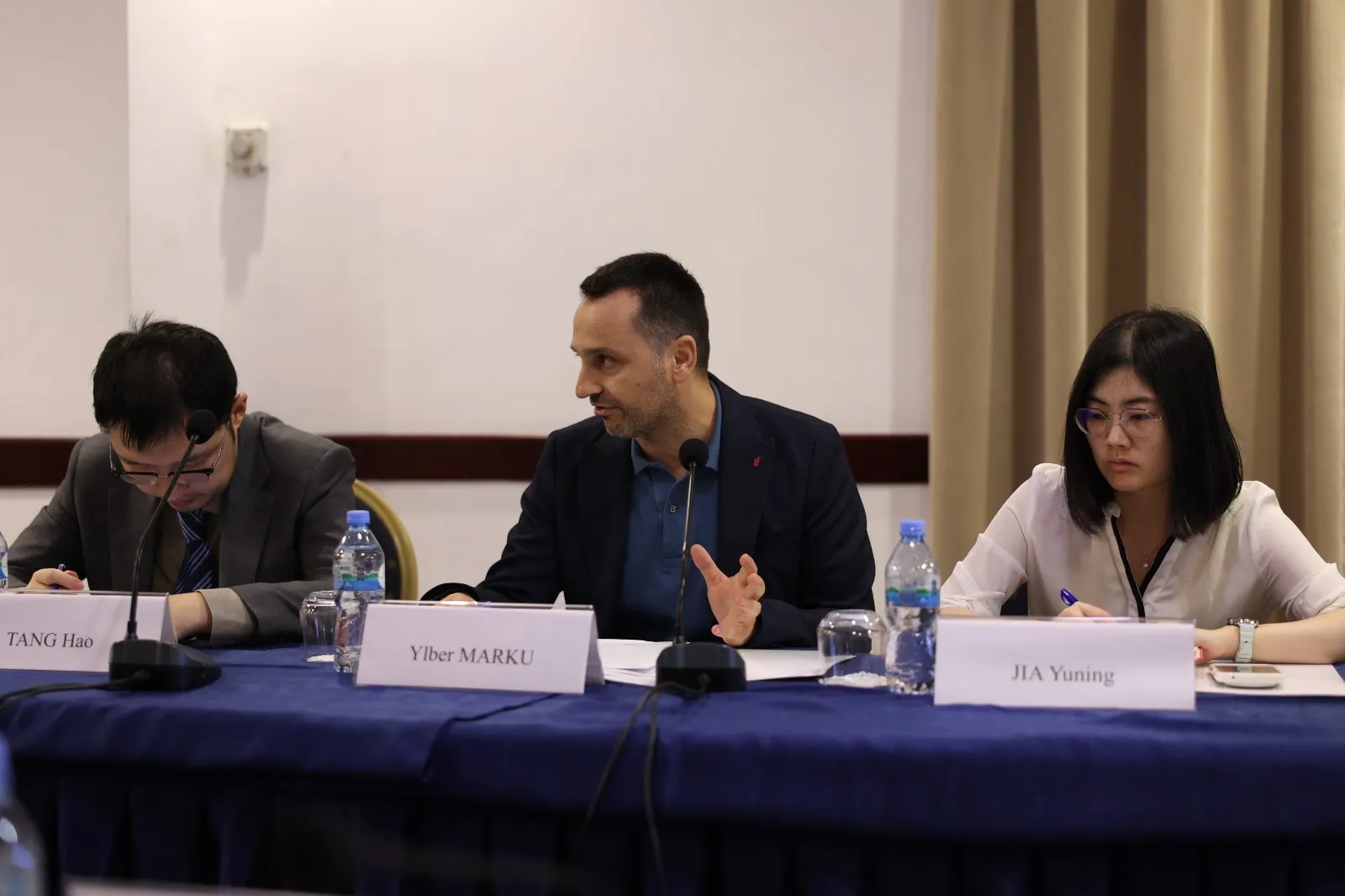
Dr. Ylber Marku, Researcher at the Institute of History of the Academy of Sciences of Albania, examined the historical dimension of China’s cooperation with Southeast Europe. His presentation emphasized that international relations had remained subject to change and that countries had needed to adapt to evolving circumstances.
Dr. Marku explained that the history of relations between China and Southeast Europe provided important context for understanding contemporary cooperation. Modern contacts had intensified during the 1950s, when ideological and socialist connections had played a significant role in shaping political and economic relations.
He examined the particular and asymmetrical nature of Albania–China relations during the Cold War. Albania had provided political support, particularly in international forums, while China had offered economic and military assistance. He distinguished asymmetry from dependency and emphasized that the two concepts had not necessarily been equivalent.
Regarding contemporary relations, Dr. Marku discussed opportunities in infrastructure, technology, transport, energy, electric vehicles, communications, education, scientific research, and culture. He highlighted diversification as an important approach for Albania, allowing the country to develop economic and academic relations with China while maintaining its European orientation and partnerships with other countries.
He also stressed the importance of local expertise and academic exchanges. Historical understanding, he argued, could support more informed decision-making and help institutions interpret changes in international relations.
His presentation concluded that future cooperation needed to rest on mutual interests, trade, knowledge, institutional dialogue, and the ability to adapt to changing conditions.
Marjana Doda: China–Albania Relations in the New International Order
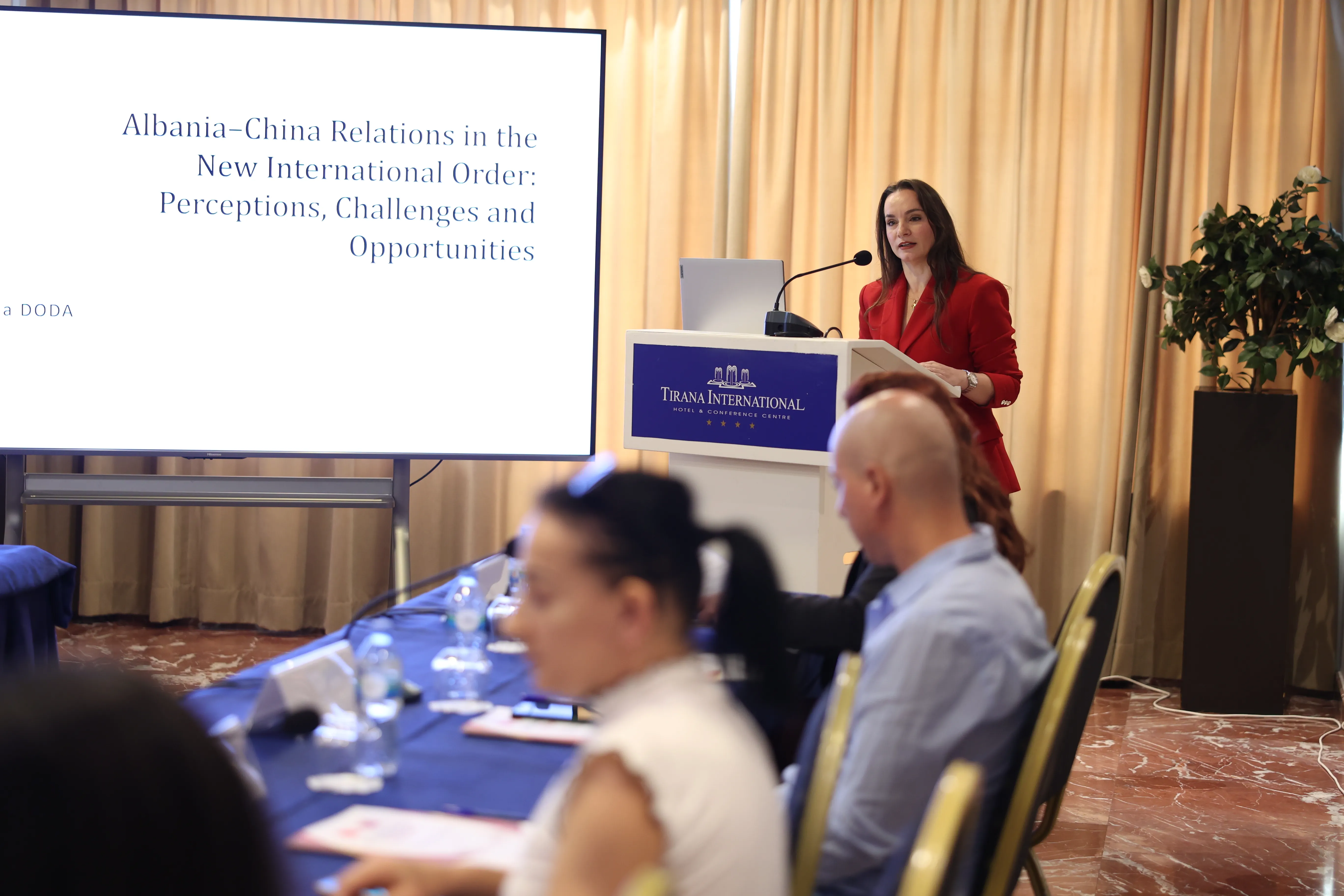
Marjana Doda, Editor-in-Chief of Argumentum.al and geopolitical analyst, examined China–Albania relations in the context of the changing international order. Her presentation addressed bilateral relations, public perceptions of China in Albanian society, and opportunities for cooperation across several sectors.
She explained that the relationship required a strategic approach based on knowledge, dialogue, and concrete interests. Drawing on the historical development of bilateral ties, she discussed the political, economic, and social rapprochement that had characterized parts of the twentieth century, followed by interruption and later renewal after political transformations.
Doda raised questions about the extent to which Albania had utilized the potential of its relations with China. She referred to economic and regional cooperation initiatives, including the Belt and Road Initiative and China–Central and Eastern European cooperation mechanisms, while noting Albania’s comparatively cautious approach.
Her presentation identified logistics, transport, technology, renewable energy, education, scientific research, tourism, and culture as areas with potential for further cooperation. She also emphasized Albania’s geographical position at the intersection of the Western Balkans, the Mediterranean, and Europe.
Doda highlighted the role of media in shaping public understanding and international relations. She argued that media cooperation had extended beyond the transmission of messages and had contributed to the ways in which societies understood one another.
She concluded that sustained cooperation required direct contact among institutions, universities, businesses, media organizations, and professional communities.
Dr. Ermir Hajdini: Technology, Artificial Intelligence, and Digital Sovereignty
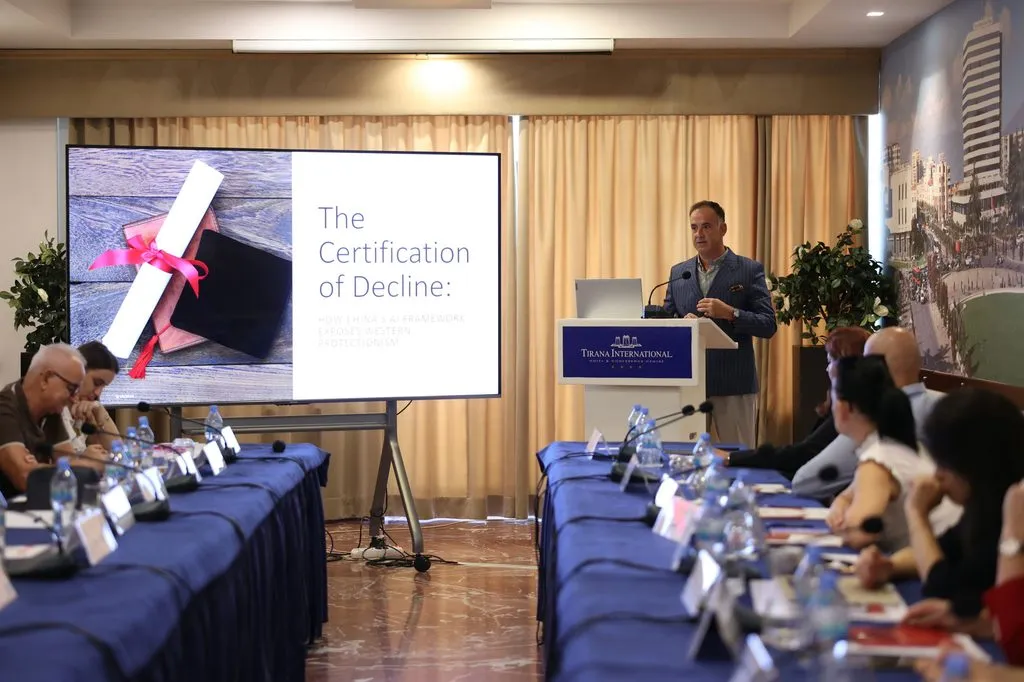
Dr. Ermir Hajdini, Cyber Law Strategist and Technology Policy Advisor, addressed the structural changes taking place in the global digital order. His presentation focused on the relationship between technological development, artificial intelligence, and digital sovereignty.
He explained that developing countries had been seeking alternatives to expensive technological models and dependence on foreign platforms. Within this context, he examined open-source artificial intelligence and its potential contribution to greater digital autonomy.
Dr. Hajdini argued that technology assessment needed to consider practical criteria such as cost, functionality, data control, and the capacity for independent administration rather than relying solely on the geopolitical origin of a platform or system.
His presentation emphasized that artificial intelligence governance required more than regulatory frameworks. It also depended on developing technological infrastructure, human resources, and institutional capacity.
He addressed the potential effects of artificial intelligence on employment and discussed the need for public policies that considered both the benefits of automation and its social consequences. He referred to Chinese legal developments concerning artificial intelligence in enterprises and worker protection.
Dr. Marsela Musabelliu: Deepening Cooperation amid Geopolitical Change
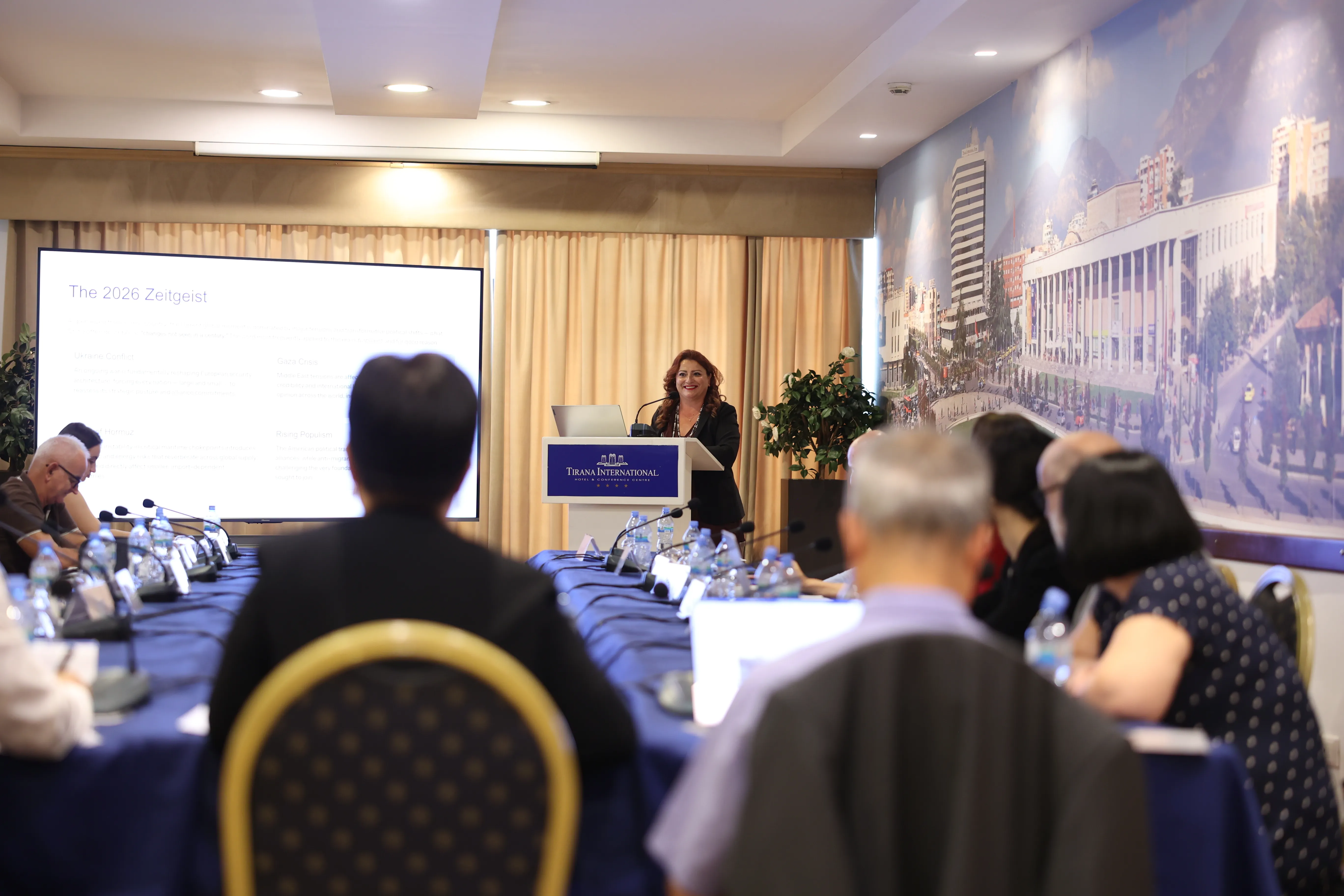
Dr. Marsela Musabelliu, Executive Director of the Albanian Institute for Globalization Studies, examined Albania–China relations within the changing geopolitical environment.
Her presentation addressed the challenges facing smaller countries in an international system characterized by competition among major powers. She discussed developments in 2026, including the war in Ukraine, the situation in Gaza, tensions in the Strait of Hormuz, the return of Donald Trump to the White House, populism, migration debates in Europe, and growing rivalry among major powers.
Dr. Musabelliu examined the position of smaller states and their efforts to maintain relations with major powers without becoming dependent on them. She emphasized Albania’s Euro-Atlantic orientation while also discussing the importance of diplomatic flexibility and the development of beneficial partnerships with different countries.
She addressed public perceptions of China in Albania, including discussions about influence, economic security, and debt-trap concerns. Her presentation emphasized the need to distinguish public narratives from concrete evidence in assessing the Albanian context.
She also referred to a national survey involving more than 1,800 respondents in 15 cities, which reported that over 62 percent of respondents had a positive perception of China. She explained that perceptions had been influenced by industrial projects, technical exchanges, education, and family memories.
Dr. Musabelliu highlighted the importance of patience, historical understanding, and strategic awareness. She argued that the history of Albania–China relations should neither be idealized nor dismissed, but examined as a resource for understanding contemporary cooperation.
Dialogue, Knowledge, and Future Cooperation
The contributions of the speakers demonstrated that understanding contemporary China required more than a single narrative or analytical framework. It involved the study of history, the examination of international developments, and the recognition of differences in political, social, and academic experiences.The discussions addressed the changing nature of Albania–China relations and the broader connections between China and the Balkan region.
Through its diverse contributions, the event created opportunities for dialogue among researchers, academics, analysts, and institutional representatives. It reinforced the importance of continued exchanges and deeper understanding between Albania, China, and the wider Balkans.
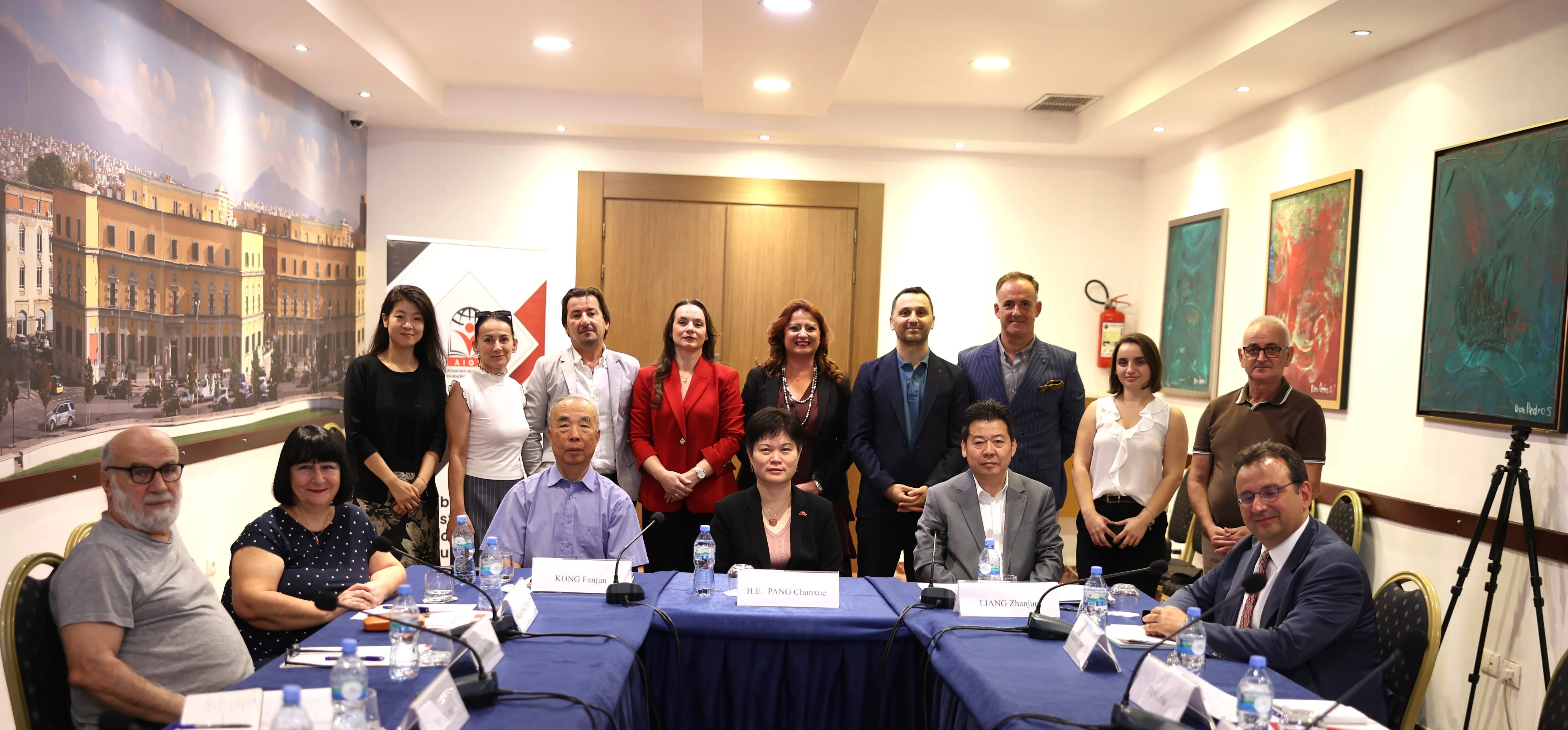
While the forum addressed serious and complex issues, the meeting was also marked by a friendly atmosphere, mutual respect, and a genuine spirit of understanding and dialogue among all participants.