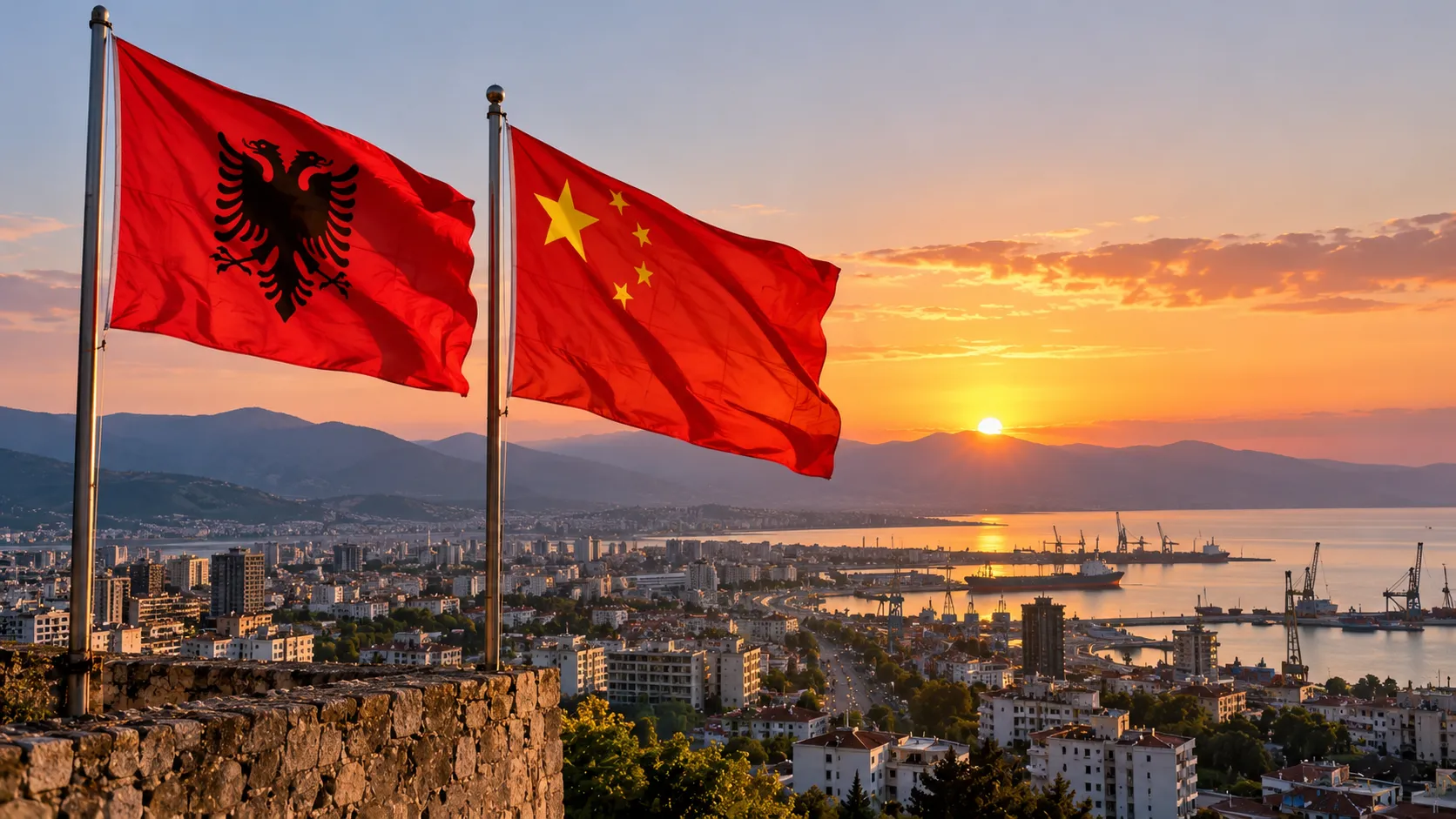
China and Albania share a long history of cooperation and a longstanding friendship dating back to the mid-20th century. Currently, both countries share a common desire and fundamental interests in continuing to deepen their traditional friendship and further advance cooperation based on mutual understanding.
The common political and ideological background of China and Albania laid the foundations for their close ties in the mid-1950s. The origins and consolidation of political relations between China and Albania rested on shared interests and mutual understanding between the two ruling parties: the Communist Party of China (CPC) and the Party of Labor of Albania (PLA). After the death of Soviet leader Joseph Stalin, winds of change blew through Moscow, the center of the communist world, and significant political shifts took hold.
After 1954, Beijing and Tirana began pursuing a policy independent of the Soviet Union. Albania’s rupture with the Soviet Union and its shift toward China was determined but gradual. Nikita Khrushchev’s rise to power in the Soviet Union marked the beginning of the Albanian-Soviet split. Albania was the first among Moscow’s Eastern European “satellites” to openly challenge Soviet leadership of the communist camp. Breaking away from Moscow represented a truly difficult challenge for Albania, given the country’s small territory, population, and economic scale. Albania’s split from Moscow was also complicated by its membership in the Warsaw Pact. Albanian leaders feared Soviet military intervention, although the break with Moscow ultimately did not seriously affect the country’s stability. Consequently, beginning in 1961, the year Albania severed diplomatic relations with the Soviet Union, China became Albania’s new strategic ally. This development undoubtedly attracted the attention of the entire communist camp, as well as NATO countries. Albania’s orientation towards China also had a pragmatic dimension, since the complete severance of all relations with the Soviet Union had caused considerable economic difficulties.
Cooperation Takes on New Dimensions
In those years, China and Albania also shared another characteristic: the state and its bureaucratic apparatus held extraordinary importance. This is clearly reflected in the clarity and rigor of the documents that the archives of both countries have brought to light even decades later. Sino-Albanian cooperation was formalized through two principal documents: the “Sino-Albanian Declaration” of January 1964 and the “Sino-Albanian Declaration” of May 1966. Both documents expressed the two countries’ determination to pursue a strong path of bilateral cooperation. Subsequently, both the PLA and the CPC undertook fruitful efforts to achieve a high level of cooperation. Within the framework of domestic politics, Albania was presented to the Chinese as a European communist country that supported Chairman Mao’s actions, while the PLA was portrayed in China as one of the oldest parties in Europe and its leader, Enver Hoxha, as a communist leader of global stature. On the international stage, China needed support from as many countries as possible, regardless of size, in its efforts to become a member of the United Nations (UN). To this end, under Enver Hoxha’s direct supervision, the entire Albanian diplomatic apparatus was placed at China’s disposal to promote its admission to the UN. Albania strongly condemned the “Two Chinas” policy and opposed it through every available propaganda and diplomatic means at every international forum in which official Tirana participated. From a geostrategic perspective, the Albanian leadership was now prepared to focus on long-term priorities, particularly with the backing of a powerful international ally.
To some extent, both sides needed one another: the Chinese leadership wanted to demonstrate to its own people and to the International Communist Movement that Chinese socialism was also supported by European countries; the Albanian leadership wanted to show its people that the country remained on the right side of the Marxist movement, opposed to Soviet revisionism, and that it once again had a powerful ally on which it could rely. Moreover, Albania would open a window for the Chinese world onto European territory, encouraging Eastern European regimes to orient themselves towards Beijing. China, in turn, would do the same in Asia, presenting Albania as the only truly communist country in Europe.
Chinese Aid to Albania: Not as a Satellite or Vassal, but as an Ally
The period from 1954 to 1978 was extremely intensive in exchange, cooperation, and aid. As historians have argued, China placed Albania at the forefront of its foreign aid recipients; in peacetime, no other country received economic and military assistance from China on a per capita basis comparable to what Albania received.
During this period, Albania’s five-year plans to build industrial facilities relied heavily on Chinese assistance. For almost two decades, the country’s needs and overall development depended, to a considerable extent, on this support. Chinese leaders followed Chairman Mao’s instruction: provide everything the Albanian leadership requested. This assistance included investments in the construction of industrial facilities and energy infrastructure; financial support for basic necessities, such as food and essential consumer goods; fulfillment of requests from Tirana concerning transport, telecommunications and technology; support for the training of specialists in various fields on Chinese territory; the financing of scientific research; and funding for the Albanian Army.
Two principles underpinned Chinese economic assistance to Albania. First, according to Premier Zhou Enlai, because Albania was geographically distant from Asia, situated in Southeastern Europe, surrounded by adversaries, and unable to obtain assistance from Western European countries, protecting and strengthening the state was vital. Second, although Albania declared itself a nation that “wished to build everything through its own efforts”, its natural and financial resources at the time were insufficient. Under these circumstances, China decided to help Albania develop a modern industry and stimulate economic growth, without demanding that Tirana become politically dependent on Beijing.
The first Chinese loan granted to Albania was documented in 1956. Unlike the Soviet Union, which had treated Albania as its satellite state in Southeastern Europe, China adopted a different approach from the outset. It expressed its willingness to establish an alliance with Albania based on the principles of equality and mutual benefit. Initially, China sent substantial quantities of basic commodities, such as maize, rice and oils, which Albania had requested. Chinese economic assistance subsequently expanded to include the acceptance of hundreds of Albanian specialists for training at Chinese universities, factories and various research centers. Most of these specialists pursued university studies in China.
From the mid-1960s to the mid-1970s, Chinese support enabled the greatest industrial development Albania had ever experienced. At the height of the Sino-Albanian alliance, between the early 1960s and the mid-1970s, Chinese assistance drove major progress in heavy industry. For the first time in Albania’s history, this led to the construction of large industrial complexes.
The Albanian government requested and subsequently secured long-term loans for the construction of such facilities and production lines. The greatest assistance coincided with the period of the Cultural Revolution, from 1966 to 1975. This marked the beginning of extremely intensive cooperation between Beijing and Tirana. The Chinese side promised to complete, within two years, the construction of all industrial facilities in which machinery had already been installed. It also provided the specialist staff for one of the largest complexes to be established in the city of Elbasan. In addition to these major projects, the Chinese side also provided assistance by delivering agricultural machinery, drilling rigs and turbines, tractors, combine harvesters, trucks, and other equipment. At the time, Albania was a rural country, with 70% of its Gross Domestic Product (GDP) coming from agriculture. For this reason, the Chinese side offered support for developing better agricultural infrastructure while also investing in large industrial facilities. In this way, the development of the Albanian economy would become more diversified.
It was common practice for the Albanian authorities to send their investment plans to Beijing and await approval from the Chinese side. The latter continuously provided recommendations and support based on its experts’ assessments and its own experience.
Assistance That Made a Difference…
Historical archives and facts that have come to light show that, during the alliance between China and Albania from 1961 to 1978, a series of industrial projects were constructed. China assisted in the complete or partial construction of about 133 industrial projects, ranging from major heavy-industry facilities to smaller projects in light and food-processing industries. Through its alliance with China, Albania was advancing two important historical processes, similar to those taking place in other countries of Eastern Europe and Asia. The first was the construction of a socialist society, while the second was the development of twentieth-century modernity, understood as the century in which the forces of technological development help human beings overcome the challenges of survival and move towards a stage of life within an economy interconnected with humanity’s diverse creative forces. Under socialism, this modernity in Albania was considered possible only through the development of heavy industry and the urbanization of society resulting from this process. From the superphosphate plant in Laç and the nitrogen fertilizer plant in Fier to the tractor manufacturing plant in Tirana and the metallurgical complex in Elbasan, along with dozens of other projects, the entire economic landscape changed. New technologies required new capacities, updated forms of human resource management, and constant access to knowledge production beyond national borders, alongside the establishment and expansion of domestic capacities for knowledge production.
This brings into the spotlight two of the most interesting aspects of constructing major industrial facilities with Chinese assistance. The first concerns the establishment of a large network of research institutes, particularly in the exact sciences, which, by the end of the Cold War, numbered more than 35. Not all these institutes were a direct result of Chinese assistance, but industrial development, with a particular focus on heavy industry and supported by China, constituted the greatest driving force behind the diversification of the country’s scientific and technical capacities, beyond the individual feasibility of any particular project. These capacities continued to expand with the establishment of higher-level scientific research institutes affiliated with universities, the Academy of Sciences and heavy industries, such as the oil industry in Ballsh and Fier.
The second, equally important aspect was the extensive urbanization that developed around major industrial facilities, most of which were under construction or nearing completion with Chinese assistance. Across Albania, approximately 37 urban areas were established during the socialist period to meet industrial needs. In many cases, these were entirely new towns built in places where previously there had been nothing more than fields or small rural settlements. They can be found from north to south, including Burrel, Rrëshen, Rubik, Laç, Ballsh, and others. In other cases, new urban expansions took place in existing cities, such as the peripheral neighborhoods of Tirana, including Kombinat and Kinostudio, or the expansion of Fier as a result of the nitrogen fertilizer plant, and of Elbasan to accommodate the workers of the metallurgical complex. These expansions reached such proportions that they often exceeded the size of the existing cities themselves.
This was important on two levels. First, the working class grew, thereby expanding the legitimacy base of the Party of Labor, which had built its ideology around the working class. Second, this new class and these new urban areas gave rise to and shaped the new socialist subject. This entailed new forms of socialization through after-work and weekend activities, new artistic and architectural expressions and, ultimately, a new way of living collectively. Although from the perspective of those in power, this created more favorable conditions for political control over the population, it simultaneously provided greater space for creative interaction between the more advanced forces of society: the technical-scientific bureaucratic class and the working class.
Intensification and Uninterrupted Cooperation
In 1970, an Albanian delegation, headed by Abdyl Këllezi, visited Beijing to discuss Albania’s forthcoming Five-Year Plan (1970–1975). The delegation remained in Beijing for more than two months. The visit lasted so long because the Albanian side made extensive demands, asking China for larger loans than in the past. This required lengthy negotiations, during which the Albanian delegation insisted that Chinese economic assistance be used for investments in heavy industry and the military sector. China, meanwhile, suggested that Albania prioritize investments in agriculture and light industry. Ultimately, the negotiations led to the signing of the 1970 Sino-Albanian protocols on economic cooperation.
Most economic agreements between China and Albania were based on the exchange of goods (barter). The agreement included a loan of 1.8 billion yuan to complete industrial facilities already under construction, as well as to establish new ones. These included a nickel and cobalt processing plant with an annual capacity of 250,000 tonnes; a brick factory with a capacity of 35,000 tonnes per year; a raw materials processing plant; a rubber manufacturing factory with an annual capacity of 200,000 tonnes; the expansion of the cement factory in Elbasan, increasing its capacity from 100,000 to 400,000 tonnes per year; as well as the construction of the television centre in Tirana and the television network throughout the country. In return, Albania would export goods to China worth 6–7% of the total loan value, including tobacco, fuel, nickel, chromium, and other products. Repayment of the total loan amount would begin in 1986 and be completed by 2000. Almost the entire Albanian industrial sector and most of its trade volume depended on Chinese aid and loans. Experts estimate that the Chinese government supported about 70–80% of the Albanian economy. Despite minor disagreements over how to use Chinese loans, the political climate during these five years (1970–1975) remained productive, and exchanges were frequent.
While China began providing economic assistance earlier, it provided military support several years later. It started in 1963, following Albania’s de facto exclusion from the Warsaw Pact and the Soviet refusal to provide military assistance. After the Albanian authorities permanently removed the last Soviet base in Vlora in 1961, efforts to secure military support shifted entirely to Beijing. Beqir Balluku, Albania’s Minister of Defense, traveled to China several times to request military assistance for Albania. Members of the delegation recalled that Chinese hospitality was extraordinary. Many historians’ books and analyses have reflected the distinctive nature and symbolism of Chinese hospitality toward Albania.
In 1968, Albania announced its withdrawal from the Warsaw Pact. At this stage, with Chinese assistance, Albania launched a massive campaign to construct underground military fortifications, including bunkers and various bomb shelters.
Conclusion
If there is one country in Europe that has experienced firsthand, and more directly than any other, what China is capable of achieving on distant land, that country is Albania. China’s decades of ideological, economic, international and logistical support for Albania can serve as a point of reference for nations that still wish to understand how China operates with countries it considers friends and allies. They have also provide a solid basis for analyzing the present and the future of this cooperation. The traditional Sino-Albanian friendship has been revived, with promising developments year by year. If, at the height of the Cold War, ideology was what brought the two countries closer together, following the change of system in Albania, this role was assumed by globalization and an increasingly interdependent world economy. While political relations have progressed slowly and have sometimes been hesitant, the business environment has built new bridges of cooperation between China and Albania in the twenty-first century.
If, in the early 2000s, business pragmatism intensified ties between the two countries, then since 2012 the Chinese approach, both globally and in Albania, has taken on a different character: that of China in the New Era. China’s current approach towards various countries and organizations at the continental and global levels has been institutionalized through initiatives launched by President Xi Jinping himself.
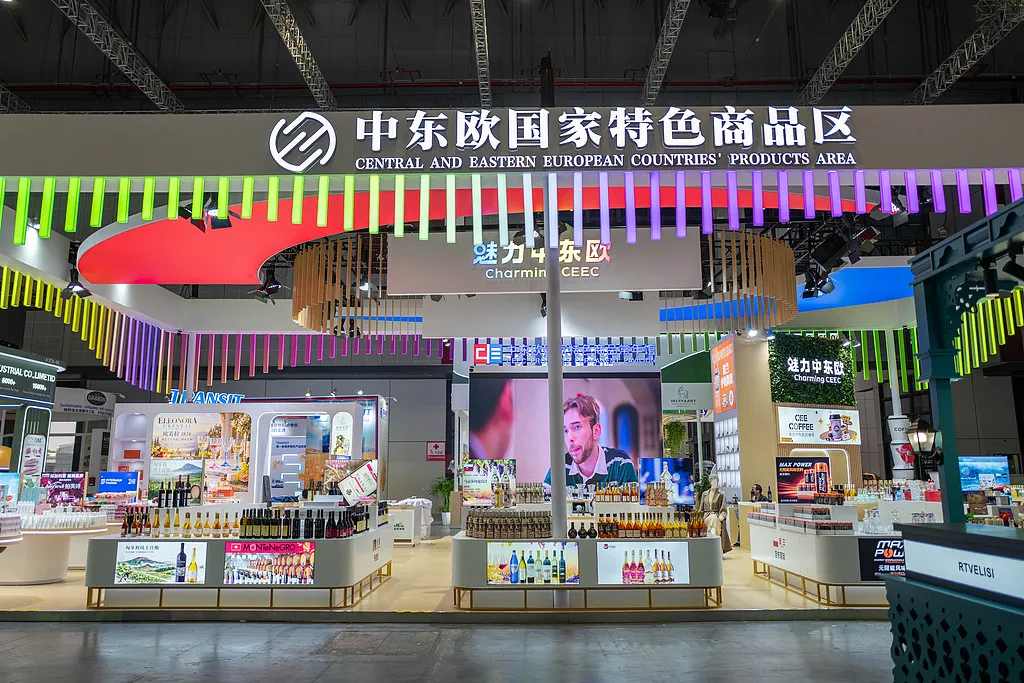
Albania currently participates in two Chinese-led platforms: the Belt and Road Initiative and the China–Central and Eastern European Countries (China–CEEC) Cooperation Mechanism. These platforms are built on mutually beneficial cooperation, facilitating communication between the parties and people-to-people exchanges. Through these platforms, as in the past, China has once again emerged as the proactive party. Beijing is promoting the intensification of relations, deepening of cooperation, strengthening of synergies, and other aspects at a highly dynamic pace. It is up to the Albanian side to identify common ground for cooperation and not turn its back on the global opportunities Beijing is offering. Those who know China understand well how much the Chinese people and policymakers value tradition, longstanding friendship, and shared memories. Against the historical background shared by the two countries, these memories are an asset and, if there is the will, can become the foundation of a new, renewed, and fruitful relationship.
The trajectory of bilateral exchanges across all areas of cooperation between China and Albania has included both peaceful periods and challenging circumstances. Nevertheless, the two peoples have known how to appreciate, welcome, and preserve their deeply rooted, long-standing bilateral ties.
AIGS